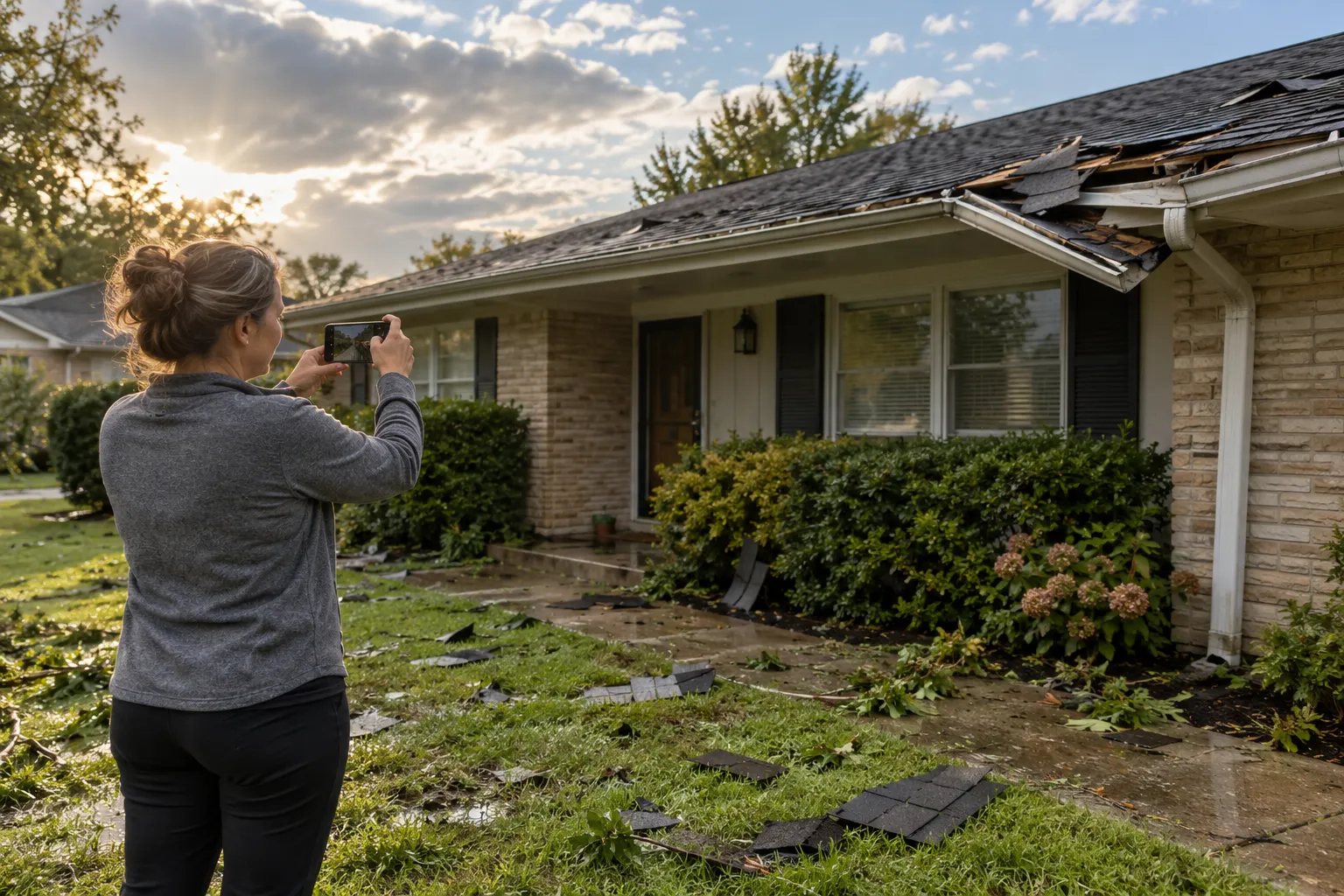
Storm and Hail Damage Roof Repair in Cincinnati
A hard storm can leave a roof looking fine from the driveway while the damage sits higher up. Hail bruises shingles. Wind lifts edges and flashing. Branches punch holes. In the Cincinnati area, severe thunderstorms are part of the calendar, so many homes take a hit sooner or later.
Talkededited Roofing is a referral service. We do not do the roof work. We link you with independent local roofing contractors in our network who handle storm damage repair, from temporary covering to full hail damage roof replacement. This page shows what you can safely check from the ground, how to build a photo file, and when to step back and let a pro take the ladder. The sooner the right provider sees it, the smaller the fix tends to stay.
Storm Just Passed? Ground Level First
Wait until the wind and lightning are gone. Wet shingles and a ladder do not mix. Once it is calm, put on sturdy shoes and walk the yard.
Look up from the ground. Check, snap, call. Scan for shingles in the grass, bent gutters, dented vents and limbs resting on the roof. Take photos from a few angles. Do not climb up. A damaged roof can give way under your weight.
Signs You Need Help Soon
Some signs mean the roof is already letting water in. Treat these as the urgent ones:
- A damp spot or drip on a ceiling
- Daylight showing through attic boards
- A bare patch where shingles used to be
- A sag in the roofline
- Piles of gritty granules in the downspouts
If a ceiling bulges with water, keep out of that room and move your belongings. Then look into emergency roof repair with a local provider.
Why Storm Damage Grows When You Wait
Keep it small. A lifted shingle is a cheap fix. A soaked deck and wet insulation are not.
Water that sneaks under a shingle can soak the wood below. In cold winters with deep frost, that water freezes and pries the gap wider. In hot, humid summers, trapped damp air feeds mold in the attic. One missed spot can turn into a bigger job by next season.
Common Types of Storm Damage
Hail Bruising
Hail knocks granules loose and leaves dark, soft spots. Look for dents on vents, metal edges and gutters. Those are clues the shingles took hits too.
Wind Lift and Missing Shingles
Strong gusts curl edges and tear tabs away. Creased shingles may still be in place, but they seal poorly.
Impact From Limbs
A fallen branch can crack shingles or punch through the deck. Do not drag it off yourself.
Flashing and Vent Trouble
Bent flashing around chimneys and pipes is a common leak point after a big storm.
Safe Things You Can Do Inside
You do have a job while you wait. Set out buckets. Move furniture and rugs. Cover items with plastic. Lift the wet insulation you can reach only if it is safe to do so, and stay clear of wet light fixtures. Skip the roof tarp unless a provider does it. Climbing a wet slope is how people get hurt.
Build a Paperwork File
Good records save time later. Start a folder on your phone.
- Photos of the yard, the roofline and any indoor stains
- The date and time the storm hit
- Short notes on what you saw and when
- Receipts for buckets, tarps or other small repairs
- A copy of your home policy
Providers in our network can often help document damage for a claim.
What a Storm Inspection Looks At
A roofing provider checks more than the shingles. Expect a look at the surface, edges, flashing, vents, gutters and the attic side of the deck. Many will take photos and write up what they find. Ask for a written summary you can keep with your file.
Repair or Replace After a Storm?
A few missing shingles on a young roof usually call for a repair. Widespread hail bruising, soft spots or an older roof may point toward hail damage roof replacement. Bungalows and ranch homes have simple rooflines, so that call often comes down to age and how much surface was hit. Ask the provider to explain both options in writing.
Talking With Your Insurance Company
Some policies may cover sudden storm damage. Check your policy for the deductible and any time limits on filing. Report the loss, share your photos and notes, and keep every email. A provider can inspect and document, but your insurer makes the coverage decision.
Watch Out for Door-to-Door Offers
After a big storm, strangers may knock and offer to look at your roof. Take your time. Do not sign anything on the porch, and do not hand over money up front. Local roofing contractors with a real address are easy to check.
Questions to Ask the Contractor
- Are you licensed and insured in this state?
- Can I get the scope and price in writing?
- Who pulls permits and handles cleanup?
- What does the workmanship warranty cover?
- How soon can you look at the roof?
A solid provider answers plainly and does not rush you.
Ready to Get It Looked At?
You have your photos and notes. Next, reach a provider. Request a callback to check provider availability, or use the request form to ask for an estimate with no obligation.
What's Included
Ground-Level Damage Check
A provider looks over shingles, edges, vents and gutters for hail marks, lifted tabs and missing pieces.
Leak Source Tracing
Providers follow stains and damp spots back to the opening that let water in.
Temporary Covering
Many providers can tarp or board a hurt section to hold off rain until repairs.
Photo-Ready Documentation
Providers can often help document damage with photos and written notes you can share with your insurer.
Typical Storm Roof Repair Costs
Prices swing with roof size, pitch, materials and how much the storm took. These are typical U.S. ranges only. Get a written quote from a provider before any work begins.
| Item | Typical range | Notes |
|---|---|---|
| Storm damage inspection | $150 – $500 | Often includes photos and a written summary |
| Temporary tarp or board-up | $300 – $1,200 | Depends on roof height and area covered |
| Minor shingle repair | $300 – $1,500 | A few lifted or missing shingles |
| Flashing or vent repair | $200 – $900 | Common leak point after wind |
| Larger section repair | $1,000 – $4,000 | Includes decking fixes if wet or cracked |
| Full replacement after hail | $8,000 – $25,000+ | Varies by size, material and roof shape |
How It Works
Check From Ground
Stay off the roof. Scan for missing shingles, dents and debris, and snap clear photos.
Call or Request Estimate
Request a callback to check provider availability, or send the request form.
Provider Inspects Roof
A local provider checks the damage, covers it if needed and explains your options.
Review the Written Quote
Compare the scope and price, ask questions, and approve repairs only when you are comfortable.
Why Call Talkededited Roofing
One Call to Connect
Skip the endless searching. Reach an independent local provider while the damage is still small.
Local Providers
Providers in our network work in the Cincinnati area and know how storms, frost and humidity treat roofs here.
Paperwork Ready
Our tips help you gather photos and notes, so estimates and insurance talks go smoother.
Honest Referral
Talkededited Roofing connects you. Independent providers do the work, and you approve a written quote first.
Other Services
Need storm and hail damage roof repair in Cincinnati?
Request a callback to check provider availability, or send a request with a few photos and notes. A local provider in our network can follow up with next steps.
No obligationStorm and Hail Damage Roof Repair FAQ
- How do I know if hail damaged my roof?
- Look for dented vents and gutters, bruised or dark spots on shingles, and granules in downspouts. Some damage is hard to see from the ground, so ask a provider to inspect the roof.
- Should I climb up to check storm damage myself?
- No. Wet, damaged roofs are slippery and may not hold your weight. Check from the ground, use binoculars or zoom on your phone, and let a roofing provider handle the climb.
- Does homeowners insurance cover storm roof damage?
- Some policies may cover sudden storm damage, but terms vary. Check your policy for deductibles and deadlines, keep photos and notes, and talk with your insurer about what applies to you.
Get in touch
Request a callback to check provider availability, or send a request with a few photos and notes. A local provider in our network can follow up with next steps.
No obligation