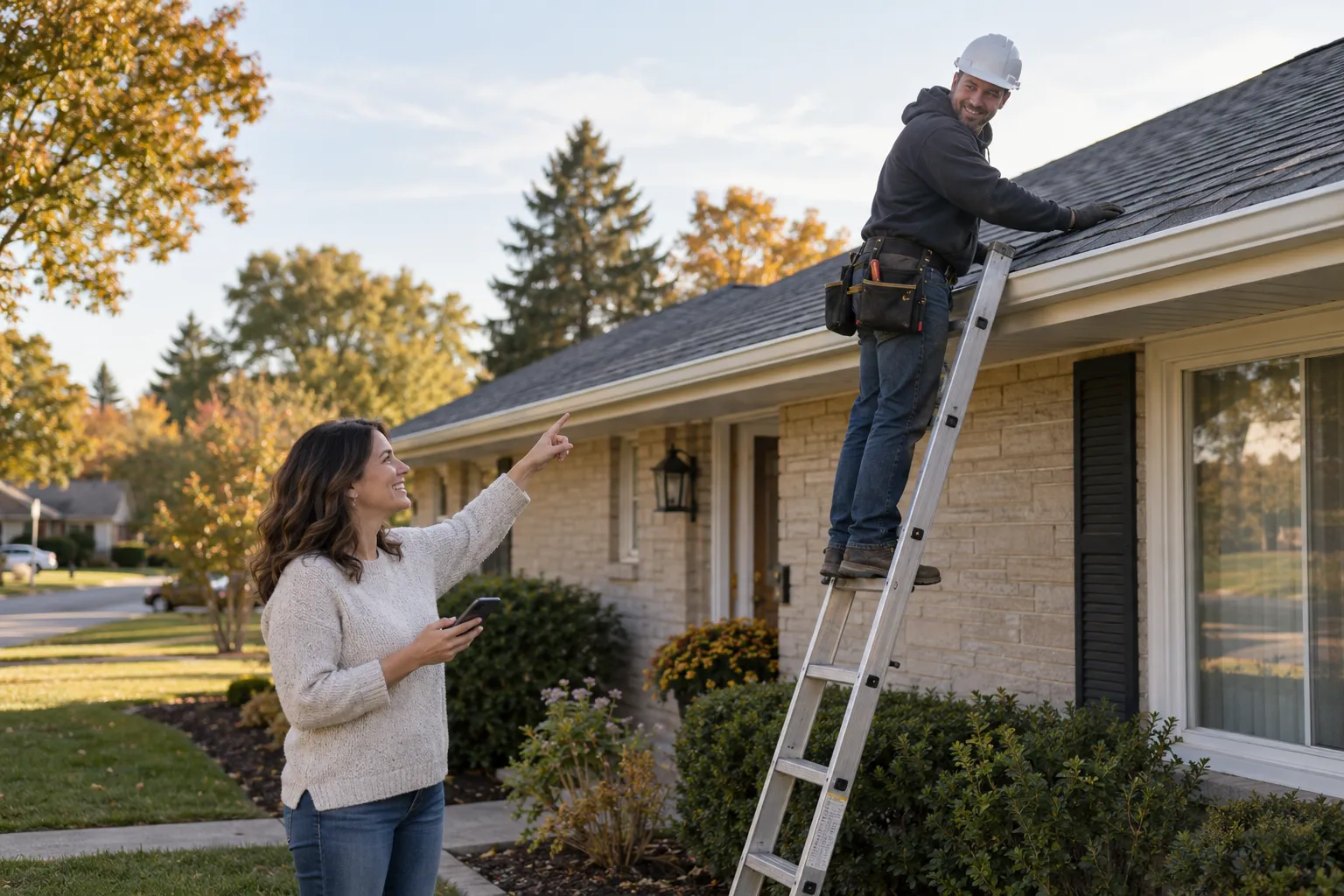
A drip on the ceiling or a few shingles in the yard can feel like a big deal. Most of the time, it is still a small job if you act early. Talkededited Roofing is a referral service. We link you with an independent local provider who can look at the roof and talk through the fix.
The providers in our network do the repair work, not Talkededited Roofing. Before you reach out, check what you can from the ground, snap a few photos and jot down notes. That makes your first conversation faster and your estimate clearer. Request a callback to ask about provider availability in the Cincinnati area, or use the request form if you would rather write it all down.
Roof Leak? Check, Snap, Call
See a stain, a drip or a damp attic board? Start with three quick moves. Check what you can see from inside and from the yard. Snap clear photos. Then reach out to a provider while the problem is still small.
Do not climb up to look. A wet roof is slick, and a fall costs far more than any shingle.
Ground Level First
You can learn a lot with both feet on the ground. Walk the yard with a flashlight and, if you have them, binoculars.
- Look for shingles that are curled, cracked or missing.
- Scan the gutters for grit that looks like sand. That is shingle wear.
- Check the chimney and vent pipes for gaps or dark streaks.
- Peek into the attic and look for damp wood, dark spots or daylight.
Write down where you see each sign. Notes help a roofer find the spot faster.
Why Small Leaks Grow Fast
Water is patient. It follows nails and rafters, then soaks into insulation far from the real hole. By the time a ceiling stain shows, the damage above it may be wider than the stain.
In cold winters, trapped water freezes and pries gaps wider. In hot, humid summers, damp wood grows mold. Older frame houses and ranch homes with lower slopes can hold moisture a long time before anyone notices.
Emergency Roof Repair: What to Do Tonight
If water is coming in right now, protect the house first. Move furniture and rugs away. Set a bucket under the drip. Poke a tiny hole in a bulging, water-filled ceiling spot so it drains into the bucket instead of letting go all at once.
Turn off power to any room with dripping light fixtures. Then reach out to a provider. Request a callback to check provider availability, because many providers can respond quickly when a roof is open to the weather.
Tarp Basics, and Where to Stop
A tarp is a short-term patch, not a repair. If a provider is not able to come out yet, a tarp can help, but only from a safe spot.
Stay off the roof if it is wet, icy, steep or windy. Never work alone, and never on a roof near power lines. If the damaged area is above the first floor, step back and let a pro take the ladder. Many providers will tarp as part of the visit.
Common Roof Repairs
Most repairs fall into a few groups. Knowing them helps you read an estimate.
Flashing and Seals
Flashing is the thin metal around chimneys, walls and valleys. When it lifts or the sealant dries out, water slips behind it. This is one of the most common leak sources.
Missing or Cracked Shingles
Wind and storms pull shingles loose. A provider swaps in matching ones and reseals the area. Quick action here can stop a wet deck.
Vents and Pipe Boots
The rubber collar around a plumbing vent cracks with age and sun. It is a small part, but it can leak into a ceiling for months.
Soft or Rotted Decking
If the wood under the shingles is soft, a provider cuts out the bad section and fits new boards before covering it again.
How a Roofer Finds the Leak
The wet spot inside is rarely right below the hole outside. A provider usually starts in the attic, tracing stains uphill. Then they inspect the roof surface, flashing and penetrations.
Some use a hose test, running water on one section at a time while someone watches inside. Share your notes and photos at the start. They narrow the search.
Repair or Replace?
A repair makes sense when damage is limited and the rest of the roof is sound. Replacement comes up when shingles are worn across the whole roof, leaks keep returning, or decking is widely damaged.
After a big hailstorm, a provider may look for bruising across many slopes, which can point toward replacement rather than patching. Ask for a written explanation of why they suggest either path. A fair provider can show you the evidence.
Repairs on Different Roof Types
- Asphalt shingles: Common on bungalows and ranch homes. Individual pieces can usually be swapped.
- Metal: Repairs often focus on fasteners, seams and panel edges.
- Flat or low-slope: Ponding water and seams are the usual trouble spots, especially after spring melt.
- Tile or slate: These need careful handling, so ask if the provider works with them.
Get Your Paperwork Ready
Organized records save time. Gather dated photos of the damage from several angles, notes on when you first noticed it, and any past repair receipts.
If a storm caused it, some policies may cover sudden damage, so check your policy. Providers can often help document damage for a claim. Keep every receipt for temporary fixes too.
Choosing Local Roofing Contractors
When you compare local roofing contractors, keep it simple. Ask whether they carry liability insurance and are licensed where required. Ask for a written quote that lists materials and labor. Ask how long the repair work is warranted.
Be careful with anyone who knocks on your door after a storm asking for money up front. Take your time, compare two estimates if you can, and keep copies of everything.
Keep It Small
A tiny fix now beats a ceiling rebuild later. Check, snap, call, and let an independent provider handle the climb.
What's Included
Leak Tracing and Inspection
A provider checks the attic, roof surface and flashing to find where water actually gets in.
Shingle Fixes
Cracked, curled or missing shingles get replaced and resealed by the provider.
Flashing and Vent Repair
Loose flashing, dry sealant and cracked pipe collars are fixed at the leak points.
Temporary Tarping
When weather delays a full repair, many providers can cover the damaged section to limit further water entry.
Typical Roof Repair Costs
Prices vary by roof height, pitch, materials and how much wood is damaged. These are typical U.S. ranges, not quotes. Always get a written quote from the provider before work starts.
| Repair item | Typical range | Notes |
|---|---|---|
| Replace a few shingles | $150 – $600 | Depends on roof pitch and access |
| Flashing repair | $200 – $800 | Chimneys and valleys cost more |
| Vent pipe boot | $150 – $450 | Often a small, quick job |
| Decking section repair | $300 – $1,200 | Rises with rot or large areas |
| Temporary tarp | $250 – $1,000 | Size and roof height matter |
| Roof leak repair, general | $400 – $1,500 | Hard-to-find leaks take longer |
How It Works
Check from below
Look at ceilings, the attic and the yard from safe spots. Note stains, drips and missing shingles.
Snap and note
Take dated photos from several angles and write down when the problem started and what the weather was.
Call or request
Request a callback to check provider availability, or send the request form with your details.
Compare and decide
Review the written quote, ask questions, and choose the repair plan that fits your roof.
Why Call Talkededited Roofing
Less Searching
Skip the endless scrolling. Reach out once and get pointed toward an independent provider in your area.
Small First
Early contact helps keep a minor leak from turning into soaked insulation or a stained ceiling.
Be Prepared
Our checklists help you gather photos and notes so your first conversation is clear.
Clear Roles
Talkededited Roofing makes the connection. Independent providers do the inspection and repair work.
Other Services
Need roof repair in Cincinnati?
Request a callback to check provider availability, or send a request with a few photos and notes. A local provider in our network can follow up with next steps.
No obligationRoof Repair FAQ
- What should I do first when my roof is leaking?
- Protect your home first. Move belongings, set out a bucket, and photograph the damage. Stay off the roof. Then reach out to a provider and share your photos and notes so they can plan the visit.
- Can I fix a roof leak myself?
- You can do safe ground-level checks and indoor containment. Roof work itself is risky, especially when wet or steep. For the actual repair, let an independent roofing provider handle the climb and the materials.
- Will insurance pay for my roof repair?
- It depends on your policy and the cause. Some policies may cover sudden damage, such as from a storm. Check your policy, keep photos and receipts, and ask your provider about documenting the damage.
Get in touch
Request a callback to check provider availability, or send a request with a few photos and notes. A local provider in our network can follow up with next steps.
No obligation